Sterling Global

Category: Business

  • PAD MAN AKSHAY KUMAR FLAGS OFF INDIA’S LARGEST NATIONWIDE RUN IN LUCKNOW

    PAD MAN AKSHAY KUMAR FLAGS OFF INDIA’S LARGEST NATIONWIDE RUN IN LUCKNOW

    • Thousands attend run and concert at Sahara Shaher Auditorium with Akshay Kumar, Singer Darshan Raval and other eminent individuals
    • Akshay Kumar makes spectacular entrance into the auditorium with female bikers, sporting pink as an ode to woman empowerment
    • Run4Niine has been simultaneously organised across 500+ cities and 20+ States in India

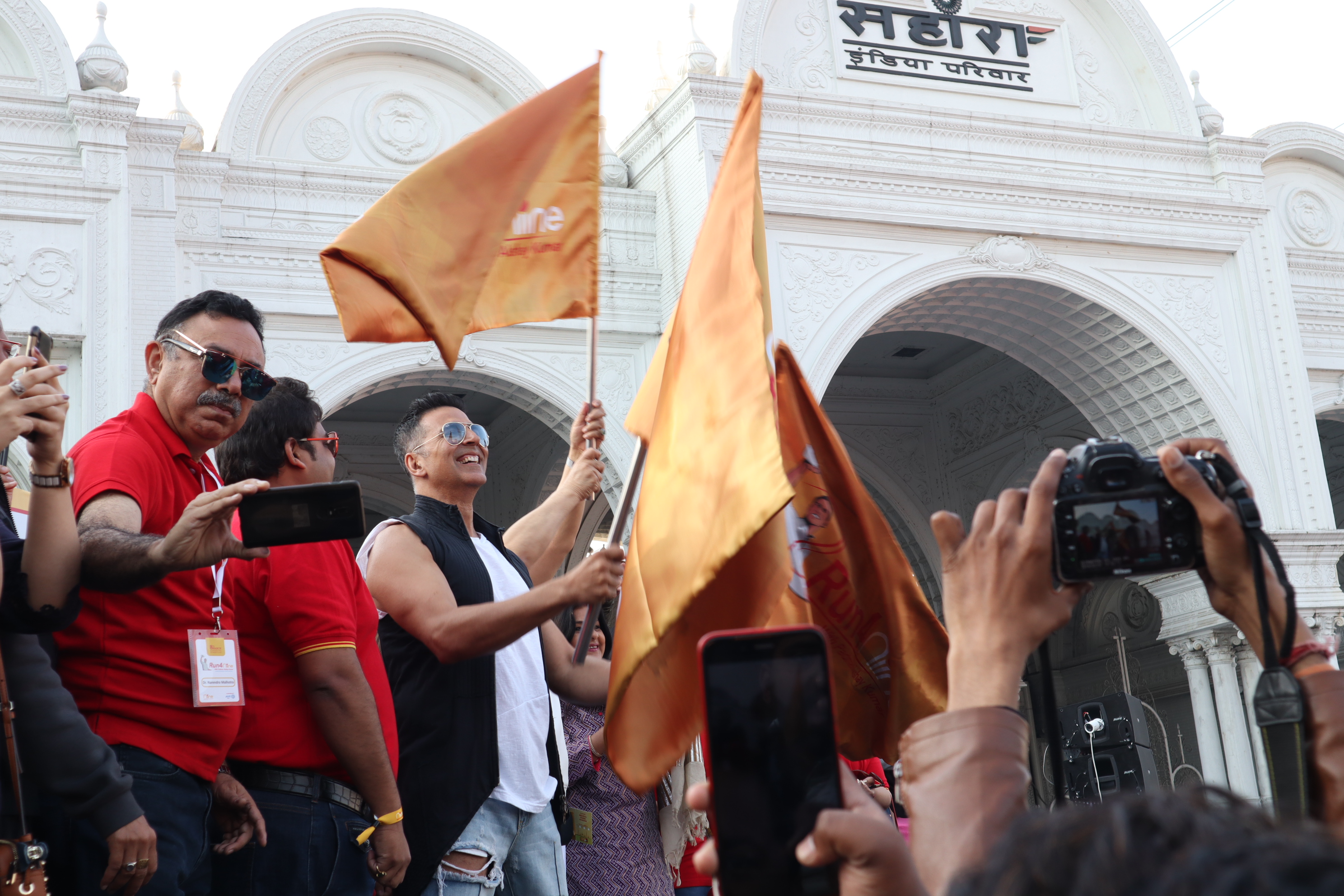
    Megastar and the Pad Man of India Akshay Kumar flagged-off Run4Niine at Sahara Shaher in Lucknow – the largest nationwide run to take place in India to end taboos around menstruation – on the 8th of March to mark International Women’s Day 2019.

    An initiative by Niine Sanitary Napkins, the made-in-India affordable yet premium sanitary napkins brand, Run4Niine was supported by the Niine Movement which launched the nationwide #18to82 campaign movement to bridge the gap between the 18% of menstruating females in India who use sanitary napkins, and the 82% predominantly engaging in unhygienic and unsafe alternatives such as old cloths, rags, hay and even ash.

    The pan India event saw over 1,00,000 participants across more than 500 cities in 20 states in India including Lucknow, Gurgaon, Delhi, Mumbai, Kolkata, Raipur, Visakhapatnam, Ludhiana, Panjim, and Howrah.  Participants from across all genders, ages and abilities, ran, jogged, walked and wheeled for the noble cause of highlighting the importance of safe menstrual hygiene practices and to break the taboo associated with periods.

    In Lucknow, over 4,000 participants joined megastar Akshay Kumar at Sahara Shaher for the run, followed by a special concert by singer, songwriter and performer Darshan Raval who performed some of his most popular songs at the event aimed to smash the stigma on menstruation.

    Akshay Kumar took his commitment to supporting fem-force to a new level when he was seen sporting pink trousers at Run4Niine as he made his grand entry into the auditorium joined by the famous all-women biker group, on their motorbikes. He then took to the stage for a series of interactions with strong women empowerment champions.

    Speaking on stage about his association with Run4Niine, megastar Akshay Kumar said, “I am excited to be partnering with the Niine Movement to encourage an open and unashamed discussion on menstruation with my fellow citizens, pad heroes, change makers and pathbreakers for the Run4Niine. Each one of us that takes part in Run4Niine helps to create an unstoppable force that will beat the stigma around periods.” 

    Discussing the significance of the event taking place to mark International Women’s Day Akshay Kumar added “International Women’s Day is a significant day for women and girls across the world; a day when women are not only celebrated for their achievements and contributions in all sectors of life but a cold reminder of the inequalities that exist in our society which have kept girls and women back for centuries. International Women’s Day serves as a fitting day for Run4Niine, where EVERYONE can come together in solidarity to tackle menstrual taboos.”

    Run4Niine is an initiative by Niine Sanitary Napkins, a challenger brand in the menstrual hygiene sector of India. Co-founded by leading Gorakhpur social-entrepreneurs, Amar Tulsiyan and Gaurav Bathwal and Kanpur entrepreneur Sharat Khemka, the brand entered the market with products that have leveraged the innovation and expertise of international experts in the United States who have extensive experience in designing products in the sanitation and hygiene space. Niine Sanitary Napkins is also the first sanitary napkin brand in India, which comes with a disposal bag and the first to launch a Period Tracker app.

    Speaking about the Run4Niine Lucknow, Amar Tulsiyan said, “My heartfelt gratitude to so many thousands of people across hundreds of cities who took part in Run4Niine. I was also glad to see so many boys and men joining hands to raise their voice against the stigma around menstruation. The Chain of Niine has never been stronger, and I’d like to thank JCI India, FOGSI, Mr Akshay Kumar, for their support. People usually run for their own fitness and health. This International Women’s Day they ran for awareness of health of woman of country especially during menstruation. Niine was created to break the silence and the stigma around periods in India. Today I can truly say that we are not alone in that wish, and that we are one step closer to improving menstrual hygiene awareness for all.”

    Speaking about the significance of the Run4Niine, Amreesh Chandra, Vice Chairman, CEL and Global Ambassador of Niine said, “Run4Niine is truly a landmark moment for the Niine Movement, and for the conversation around menstrual hygiene as a whole. The enthusiasm that the run has received across cities shows the real support across India for breaking the taboos around menstruation. As an educationist I am sure Niine will play a major role in the eradication of girl absenteeism in schools on account of menstruation. I would like to thank our partners JCI India, FOGSI for their strong support and Sahara for a beautiful venue for a noble cause, and other organisations and everyone who has registered to Run4Niine, showing the world that India will no longer be silent about periods.”

    Run4Niine is being organised in the support of esteemed partners and is powered by JCI India, the non-profit organisation encouraging young people to be active responsible citizens and to take the ‘Let’s Talk About Periods’ message to the streets of hundreds of cities. It is supported by Federation of Obstetric and Gynaecological Societies of India (FOGSI), a long-term partner of Niine and one of the largest membership-based organizations for specialized professionals within the field of obstetrics and gynaecology in India, who have also been organising workshops in several cities where Run4Niine activities are taking place to help encourage more people to take an active role. Run4Niine national partners include: Fortis Hospitals as medical partner across the cities they are present, and Coca-Cola as beverage partner across 10 cities including in Lucknow.

    Speaking about their role in taking the Run4Niine message to hundreds of cities across India, JCI India 2019 President Shirish Dundoo and JCI India 2018 President Arpit Hathi, who are mobilising support for Run4Niine across cities jointly said: “JCI India is proud to have a partner like Niine for the initiative ‘Run4Niine’. It has been brilliant to see so many young people across the country taking action and running, walking and more to show their support for menstrual hygiene awareness. It is shocking that there is still a stigma and taboo about periods that restricts women and girls across India – but the Run4Niine has shown that people across of India – young and older seek a change for the better. We are pleased to have played a role in this and look forward to working with Niine on future initiatives. JCI India has association with Niine with common interest to address the women health issues.

    We are associated to bring awareness among women for proper menstrual hygiene. Our aim is to educate women across the country to overcome the taboo of menstruation. We ensure that sanitary awareness reaches those most in need under the Prayas program. We are promoting women’s health awareness with this project as a part of Impact 2030 which is integrated into the UNSDG (United Nations Sustainable Development Goals). Let’s all Inspire youth, Inspire leaders, and inspire Change to create an impact in society and bring awareness about menstrual hygiene in women and girls. On this International Women’s Day let’s all support our sisters through this Prayas and Run4Niine for a better world.”

    FOGSI 2018 President, Dr Jaideep Malhotra and FOGSI 2019 President, Dr Nandita Palshetkar jointly said: “We are extremely proud to be associated with Run4Niine and truly believe in their vision to tackle menstrual taboos. We will be conducting workshops across India to help encourage people to start a dialogue on periods.”

    Innerwheel Club District 312 and Rotary International District 3120 have been actively supporting the Niine Movement’s mission and have organised runs in several cities across North India. Innerwheel Club District 312, District Chairperson, Mrs. Shalini Talwar and Mrs. Alka Past District Chairman jointly said: “We are delighted to partner with Niine Movement and support Run4Niine. It is very important that we encourage candid conversations surrounding women’s health; conduct sessions on gender, sexuality, and menstrual hygiene management, which will help young children understand menstruation as a clean and natural biological process.”

     Rotary International District 3120, District Governor Rtn Stuti Agrawal and President Rotary Club Lucknow jointly said: “We have been working with the Niine Movement to raise awareness of menstrual hygiene for over a year and more than eve before we are committed to ending every taboo around menstruation. Run4Nine has been an incredible opportunity to bring together everyone for one cause.”

    Run4Niine is also supported by WaterAid India, an international not-for-profit determined to make clean water, decent toilets and good hygiene normal for everyone, everywhere within a generation, and UN Women, the United Nations entity dedicated to gender equality and the empowerment of women.

    Speaking about the importance of menstrual hygiene awareness, Farrukh Khan, Regional Manager (North), WaterAid India said, “Menstrual hygiene management is an important area of work for WaterAid. We use an approach that is comprehensive and focuses on addressing taboos while also creating an enabling environment to foster change. We believe that the issue needs a holistic approach that addresses all aspects, be it ensuring access to products, infrastructure or safe disposal of waste.”

    Speaking about UN Women’s work in menstrual hygiene awareness, Nishtha Satyam, Deputy Representative, UN Women India MCO, said “Access to sexual and reproductive services and information is linked to all the aspects of women empowerment. The fact that only 18% of the women in India have access to sanitary napkins is a stark reminder of the efforts required to uproot misinformation at a grassroots level. Menstrual hygiene is also a sanitation matter. We need to provide more WASH (water, sanitation, and hygiene) facilities for women and girls, so that they can access all spaces in a safe and dignified manner. UN Women is pleased to support Niine Movement’s nationwide ‘Run4Niine’ this International Women’s Day.”

    Other supporters of Run4Niine include Sahara Group of Companies including Sahara Hospital and Sahara Shaher; Food Partner Buttercup Bungalow Bakery, Levana Hotels, Cappuccino Blast; Hospitality Partner Levana Hospitality with the kind support of Director Rahul Agrawal; Medical Partner Sahara Hospital; Hygiene Partner Freshca, Media Partners Big FM, India News. Run4Niine associates include Rotary International District 3120 and District Governor Rtn Stuti Agrawal, Innerwheel Club District 312 and Chairperson Mrs. Shalini Talwar, Chairperson; JCI India and especially JC Ashwini Kumar, President Zone 3 (U.P, East, West Bengal, Bihar & Jharkhand) based out of Lucknow; FOGSI’s Dr. Uma Singh, President FOGSI Lucknow and Dr. Preeti Kumar, Senior FOGSI Member; National Cadet Core (NCC) and Major General A. K. Sapra, Addl Director General, U.P; Srijan Foundation and its Founder Amit Sraikwal; Chetna Institute of Mentally Handicapped Children and its Founder Mrs. Alka Bansal; Jute for Life and its Founder Anjali Singh; U.P. Mahila Samakhya, a Government of U.P. Initiative; Pad Bank  NGO by College Students of Bareilly inspired by the film Pad Man and the Rehabilitation Institute of Visually Impaired.

    For further information on Run4Niine, log on to:  www.niine.com/run4niine
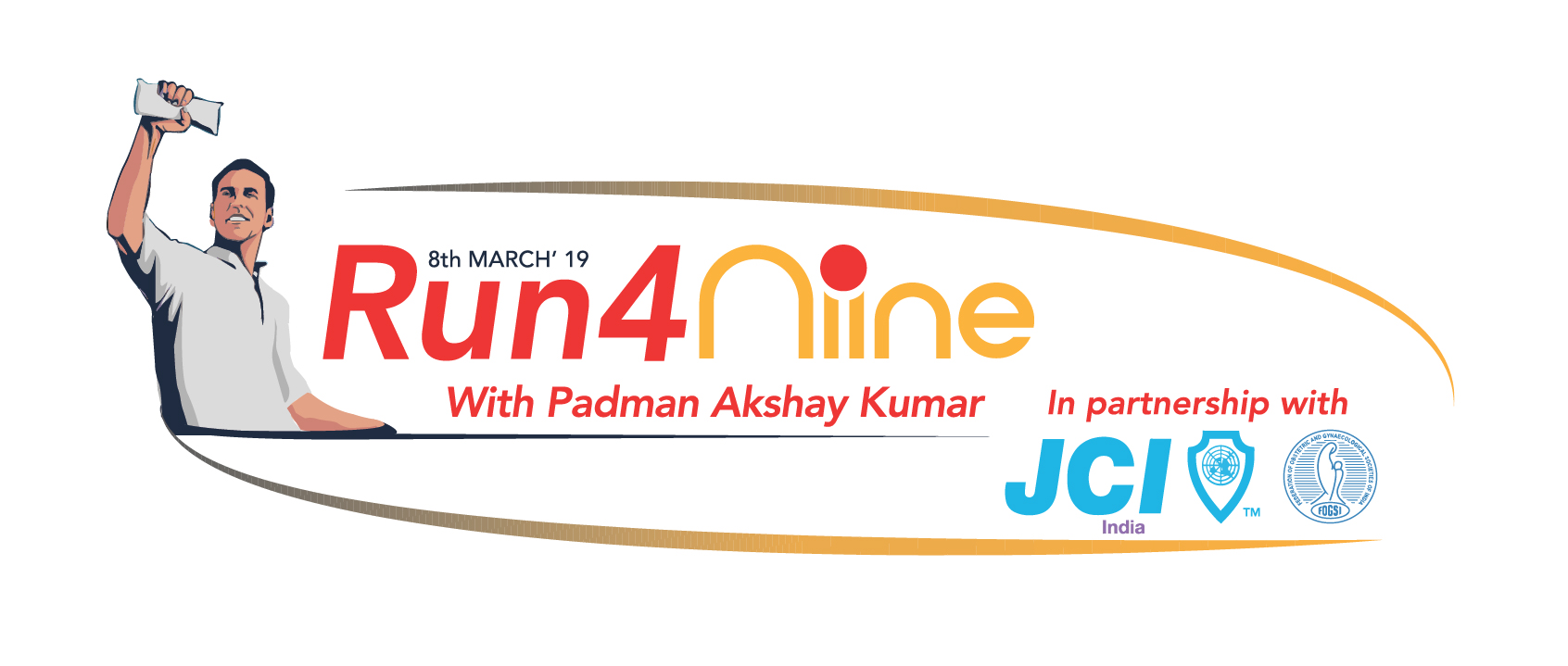
  • India runs with Period-Positive vision for Run4Niine – Sterling Media

    India runs with Period-Positive vision for Run4Niine – Sterling Media

    Megastar and India’s very own ‘Pad Man’ Akshay Kumar has joined forces with the Niine Movement to announce the launch of Run4Niine in up to 500 cities in India on the 8th of March 2019 to mark International Women’s Day.

    Run4Niine expands the nationwide #18to82 campaign initiated by the Niine Movement, to bridge the gap between the 18% of menstruating females in India who use sanitary napkins, and the 82% predominantly engaging in unhygienic and unsafe alternatives such as old cloths, rags, hay and even ash. This will be achieved by tackling the age-old taboos associated with menstruation in India, which have resulted in school dropouts for girls to severe reproductive health ailments.

    Run4Niine aims to ensure no woman or girl is left behind in society due to her biology, whilst also engaging the men and boys of India to help show support for the cause. As an inclusive initiative, Run4Niine will bring together both genders, across all ages, backgrounds and of all abilities – to run, walk, jog and wheel across their cities, and help break the silence associated with menstruation and to join the Chain of Niine.

    Run4Niine partner Junior Chambers International (JCI), the non-profit organisation encouraging young people to be active responsible citizens, will help take the ‘Let’s Talk About Periods’ message to the streets of India and in up to 500 cities, made possible through JCI’s chapter networks.

    The Pad Man of India and Niine Movement champion Akshay Kumar will flag off Run4Niine in Lucknow. In addition to starting this unique nationwide campaign, Akshay Kumar will also be a part of a special event extravaganza where guests will be entertained and inspired to talk about the importance of menstrual hygiene awareness.

    Speaking about his association with Run4Niine, megastar Akshay Kumar said, “When I made the movie Pad Man, I was hoping for it to turn into a conversation. But today, after a year, I can proudly say that it has grown to become a phenomenal movement, truly at a grass roots level. I am therefore excited to announce my partnership with the Niine Movement to take this to the streets of India and invite my fellow citizens, compatriots, change makers and pathbreakers to join me for Run4Niine, to raise awareness and initiate action on menstrual hygiene. Each of us when joined together will form a chain – an unstoppable force fighting an improbable stigma.” 

    Speaking on the significance of the event taking place to mark International Women’s Day Akshay Kumar added “International Women’s Day is a significant day for women and girls across the world; a day when not only women are celebrated for their achievements and contributions in all sectors of life but a cold reminder of the inequalities that exist in our society which have kept girls and women back for centuries. International Women’s Day serves as a fitting day for Run4Niine, where EVERYONE can come together in solidarity to tackle menstrual taboos.”

    The Federation of Obstetric and Gynaecological Societies of India (FOGSI), a long-term partner of Niine and one of the largest membership-based organizations for specialized professionals within the field of obstetrics and gynaecology in India, also supports Run4Niine. FOGSI workshops will be set up in each of the cities where Run4Niine activities will be taking place, to help encourage more people to take an active role.

    Run4Niine marks the next step in the Niine Movement’s 5-year ambitious plan for action on menstrual hygiene awareness, which is to engage the youth. The inclusion of young children – both girls and boys – in Run4Niine represents everything at the heart of the Niine vision. At its core lies the belief that engaging the future minds of India in their formative years now, will make for a better tomorrow.

    The Niine Movement and Niine Sanitary Napkins, the made-in-India, affordable yet premium sanitary napkins brand was co-founded by leading Gorakhpur social-entrepreneurs, Amar Tulsiyan and Gaurav Bathwal and Kanpur entrepreneur Sharat Khemka. Speaking about the launch of Run4Niine, Amar Tulsiyan said, “I am delighted to be launching Run4Niine. The first event of its kind, we aim to galvanise the population into action and hope to get every woman, man and child running to break the taboos around menstrual hygiene. I would like to thank JCI and FOGSI for their support to help extend the reach of Run4Niine further, and to thank Mr. Akshay Kumar for his continued support. It’s wonderful to have the opportunity to work with such esteemed organisations and brilliant minds and we look forward to expanding our partner footprint further to truly create a Chain of Niine.”

    For further information on Run4Niine, log on to:  www.niine.com/run4niine

  • BOARDROOM POWER SUIT – EMPOWERED WOMEN NO LONGER NEED A POWER SUIT

    BOARDROOM POWER SUIT – EMPOWERED WOMEN NO LONGER NEED A POWER SUIT

    As the obstacles facing women in business become clearer, global communications and brand strategy specialist Natasha Mudhar, Global CEO of business consultant Sterling Media takes aim at the board room power suit and argues that women shouldn’t need to dress to impress in order to be heard.

    A recent report found that FTSE 100 companies saw no change in the number of women in the board room whilst FTSE 200 companies saw a sharp drop, highlighting that despite discussions of the gender pay gap, the glass ceiling remains firmly in place. There are many more obstacles that stand in the way of women’s success in business, ranging from unequal pay to corporate fashion. Case in point: the power suit. Sounds like something from a Marvel flick. But the reality is, the boardroom ‘power suit’ is more sixties pin-up than Gal Gadot’s Wonder Woman.

    For years, as the Global CEO of Sterling Media – a multi-disciplinary, global business services and communications consultancy specialising in brand strategy – I have felt the need to dress in a certain way in order to be taken seriously amongst my male counterparts at important boardroom meetings. Whether it be launching iconic brands like Aston Martin in India or listing a corporate powerhouse on the London Stock Exchange, I have always held my own when it comes to success in a male dominated industry like marketing and advertising. Would I have been able to do so had I turned up to the planning meetings in a dress and pearls? I fear not.

    I have always had my own style, and fashion plays a big part in my life. However, when learning my trade in the communication agency, I soon found that my idea of style began to sub-consciously change, involuntarily. I would attend meetings with the top names of the luxury industry looking to offer the brand strategy services of Sterling Media, and find that the chief sitting at the head of the table would hardly even aim a glance in my direction. It was only once I began speaking would his eyes widen, his posture soften and the opaque bubble clearly surrounding me would pop. Only then would he pay me the attention. I may have won that contract for Sterling Media but it wasn’t without its collateral damage.

    The sheer fact that I felt like he wasn’t lending me the respect he was showing to the men around the table touched a nerve with me. Before you knew it I was wearing clothes that I imagined would make look more serious and as a business consultant ‘should’– cue the emergence of the ‘Boardroom power suit’. I was keen to be taken seriously, and I felt the only way to do so was to begin dressing as close to the males in the room as possible. How wrong it that? I felt like an element of my individuality was taken from me.

    It’s only now that I have spent over a decade as a business consultant in the marketing and advertising industry that my portfolio does the talking. I have built up a profile that digs deeper than the clothes I wear, but there is no doubt that I was forced to buy into the power suit culture in the opening years of my career.

    Now that the topic of equal pay and diversifying the corporate and global communications world with more women leadership is being openly discussed, I feel it’s the perfect time to address the power suit, and spread the message that women needn’t have to dress a certain way in order to be heard.

    This is not advocating turning up to job interviews and board meetings donning a pair of joggers and a tee and expecting anything more than a scowl and a literal and metaphorical door slammed in your face, but it is saying that women should feel comfortable in their own individual style.

    There is a difference between corporate wear and the power suit. I believe that as long as somebody, male or female, is dressed in a smart way – they should be judged on what is coming from their mouths, not what is on their feet.

    Women should feel free to express themselves with their own choice of clothing, and the boardroom power suit is a regressive stereotype which has no place in business. We should be able to address a room, which may happen to be full of men, and be shown the common courtesy of acknowledgment regardless of attire.

    21st Century business is not about fitting in. It’s about individuality, drive, passion and innovation – regardless of gender, ethnicity, religion or social class.

    Let’s add dress sense to that list.

  • THE IMPORTANCE OF TRANSPARENCY IN BUSINESS

    THE IMPORTANCE OF TRANSPARENCY IN BUSINESS

    by Natasha Mudhar.

    There is wisdom in the old adage “honesty is the best policy”, especially for businesses. We live in an increasingly connected world, where openness and truthfulness is praised and secrets are viewed with suspicion. For businesses and brands, this has meant a concerted effort must to appear honest, and meet public expectations – or face the consequences.

    A good example of the cost this can have is the Volkswagen Emissions scandal, which led to resignations, plummeting stocks, and a tarnished brand reputation. Other organisations have also fallen foul of concealing facts for years that ultimately damage their brand significantly once discovered.

    Transparency in an international organisation can often be the simplest and most beneficial route for a company. It saves money through avoiding crisis management and helps to enhance a brand’s reputation with the right brand strategy. Furthermore, it can strengthen the general public’s trust in an organisation. This is something that governments around the world have been benefitted from.

    The UK government for example has instigated a number of initiatives to improve transparency and accountability, including the freedom of information act, improving the availability of open data, and giving people a right to data. This kind of openness has encouraged greater public participation in decision-making, and it is something businesses have been trying to replicate with varying levels of success.

    A transparent business is a more purposeful business; it is a business that an audience feel they can trust and one that shouts authenticity in everything they do. It is no accident that the rise in transparency in business has coincided with the popularity of corporate social responsibility. Honest practices demand businesses and brands to be more responsible; there can be no sustainability or responsibility without transparency.

    This relationship between corporate social responsibility and transparency in business highlights the fact that corporate honesty is synonymous with three other concepts: trust, responsibility, and accountability.

    Together these help to support sustainable growth for any organisation, and can result in better business management, increased innovation, greater profitability and of course a positive impact on social good. Much of this is rooted in an understanding of the importance of knowledge and the importance of sharing that knowledge through a strong communication strategy and influencer marketing so that it is available, accessible and usable.

    Whilst these are noble goals for any organisation, it needs to be actively pursued to have a lasting impact and maintain trust with its customer base. Corporate social responsibility goes beyond being a global PR or brand strategy. Recent controversies around social media companies like Facebook regarding secret personal data collection as well as the proliferation of harmful and potentially election-swinging fake news stories have undermined the image the company seeks to portray of an open, user-friendly and trustworthy platform.

    The focus for companies seeking to be transparent has to be on putting credible social, environmental and ethical data in people’s hands, so that they are able to make more informed – and therefore better – decisions. For businesses, an added benefit is the multi-plier effect it creates: consumers will ideally become more loyal with greater demand for products from a trusted source of relevant and truthful information; employees – the growth engine of companies – will be motivated to work more efficiently to meet demand, and so forth. A good example is the commitment to open data and accessibility that private corporations like Monsanto have demonstrated, with plans for openness within the agricultural sector that would benefit many customers and communities.

    The importance of trust and dissemination of trustworthy business practices and information to consumers and employees ties into the key concept of responsibility. Companies have a responsibility to their stakeholders, and that includes a willingness to share detailed information on the business and its activities. This responsibility also extends to making this information easily accessible to consumers, highlighting the importance of creating an open platform, where everyone irrespective of position/background can be heard and can hear others too. The recent popularity of petition platforms on government websites demonstrates this.

    The result of greater trustworthiness and responsibility is that the customer base is able to grow more aware of their issues and rights, enabling them to hold organisations accountable, whether they are governments or private sector companies. As businesses become increasingly transparent, accountability can be a powerful motivator in remaining so; the impact of the digital revolution on transparency is such that we will always leave a data footprint – and as many companies and individuals have discovered in the past year, the truth will come out sooner or later.

    The ever-growing need for transparency within businesses within our increasingly connected and data-driven world also highlights an essential need for the private and public sector to work collaboratively.  Through working together, businesses and governmental organisations are able to provide universal access to knowledge and information that’s available, useable and accessible.  This also extends to collaboration between commercial enterprises and not-for-profits.

    Transparency can seem like a daunting step for traditionally private businesses. But with more organisations ranging from tech giants to socially conscious enterprises committing to being trustworthy, responsible and accountable to their customers, it is increasingly clear that it is possible be both transparent and commercial; to be honest and successful. Never has there been a better time for an organisation to be doing well by doing good – in full view of the public with nothing to hide.

    Miss Natasha Mudhar, Global CEO, Sterling Media, the global business and communications consultancy, bringing brands, individuals and companies closer to their purpose.

  • VOTE 100, THE FIGHT FOR THE FEMALE VOTE

    VOTE 100, THE FIGHT FOR THE FEMALE VOTE

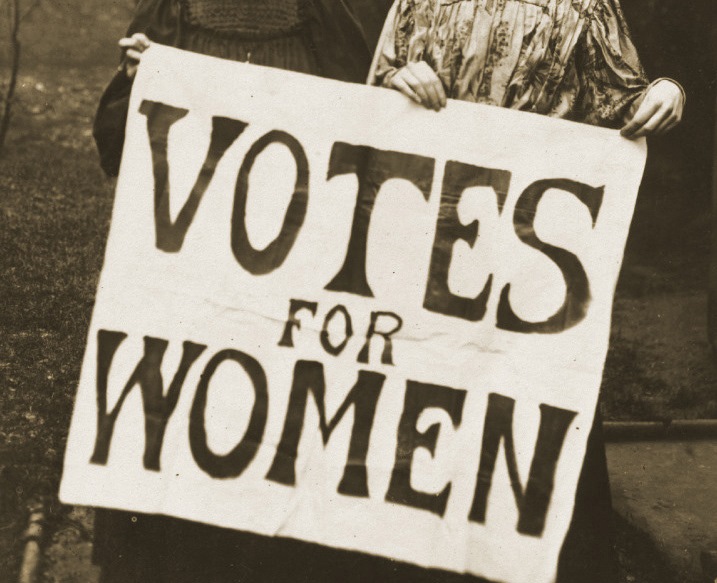
    2018 marks the 100th anniversary of Women winning the right to vote. With every suffragette, is a girl or woman who is part of her legacy. With every year that passes, more and more females from across the globe are achieving success in all sectors and from all walks of life because of the dedication, passion and commitment of many women 100 years ago who wanted change.

    Innovators and heroines such as Sophia Duleep Singh and Emmeline Pankhurst cemented their places in history as they fought for the equal rights of women, which throughout the 20th century sparked further revolution as women began to have more choice and freedom over their lives. There is no doubt that they did for us in the past has, 100 years on, helped to create a positive present and future for us.

    The impact of the suffragette movement is so profound as it connects to woman’s rights movements which has a multiplier effect on the lives of women at home and at work.  This includes the right to divorce, access to contraception and sexual freedom and equal pay in the workplace. Today, over 70% of women aged between the ages of 16-64, are in work compared to just one tenth of married women in the 1930s. There are now female politicians, doctors, police officers and lawyers who are all contributing to much a more positive society. They also continue to excel in education, often out performing boys in a number of subjects.

    At the turn of the 21st century, there has been a growing influence of women in businesses, both as entrepreneurs and members of the board. As their presence continues to grow businesses have been enjoying the benefits of much fresher and innovative marketing and advertising approaches. This would never have happened if it wasn’t for the suffragettes who disrupted the status quo and brought about change for women to achieve a greater role in society for what had been a long and established patriarchal establishment.

    The issues these women battled against are exactly what brand strategy experts Sterling Media echoes today. The company was founded by Teji Singh and now headed by Natasha Mudhar, who both defied expectations as strong Asian women working in the Global communications sector.

    Business consultant Sterling Media works with major global organisations like the UN and grassroots local champions as well as convening various sectors – including government, corporate, media, celebrity and civil society – to make an impact on the ground. Amongst their best examples of this was the global launch of the Spice Girls’ endorsed short film promoting girls and women rights #WhatIReallyReallyWant, which broke the internet with over 150million views in a matter of a few days.

    The issues these women battled against are exactly what business consultant and global communications experts at Sterling Media echoes today. The brand strategy agency was founded by Teji Singh and now headed by Natasha Mudhar, who both defied expectations as strong Asian women working in the communications sector.

    Sterling Media works as a business consultant with major global organisations like the UN and grassroots local champions as well as convening various sectors – including government, corporate, media, celebrity and civil society – to make an impact on the ground. Amongst their best examples of this was the global communications launch of the Spice Girls’ endorsed short film promoting girls and women rights #WhatIReallyReallyWant, which broke the internet with over 150million views in a matter of a few days.

    Granted, there is still a lot of work to be done as many girls and women are not given the same rights as men.  Only recently, women in Saudi Arabia were allowed to drive and many women are still not being paid the same as men in most countries, but with the likes of Angela Merkel being one of the most powerful leaders in the world, and Saudi-Arabia’s best known film maker being nominated for an Oscar, it is clear that the future is bright. We need to establish more positive role models – both male and female – so that young people can follow in their footsteps and can help bring about the next wave of change. Women are already independent and strong enough to face the world, not all of them are given that opportunity to show it. It is female-led brand strategy and global advertising agencies like Sterling Media that are not afraid to face these issues head on, and from what they have shown so far, will no doubt become the spearhead for women’s rights and equality movements across the globe.

  • DSC Prize Shortlist For South Asian Literature 2018 Announced – Sterling Media

    DSC Prize Shortlist For South Asian Literature 2018 Announced – Sterling Media

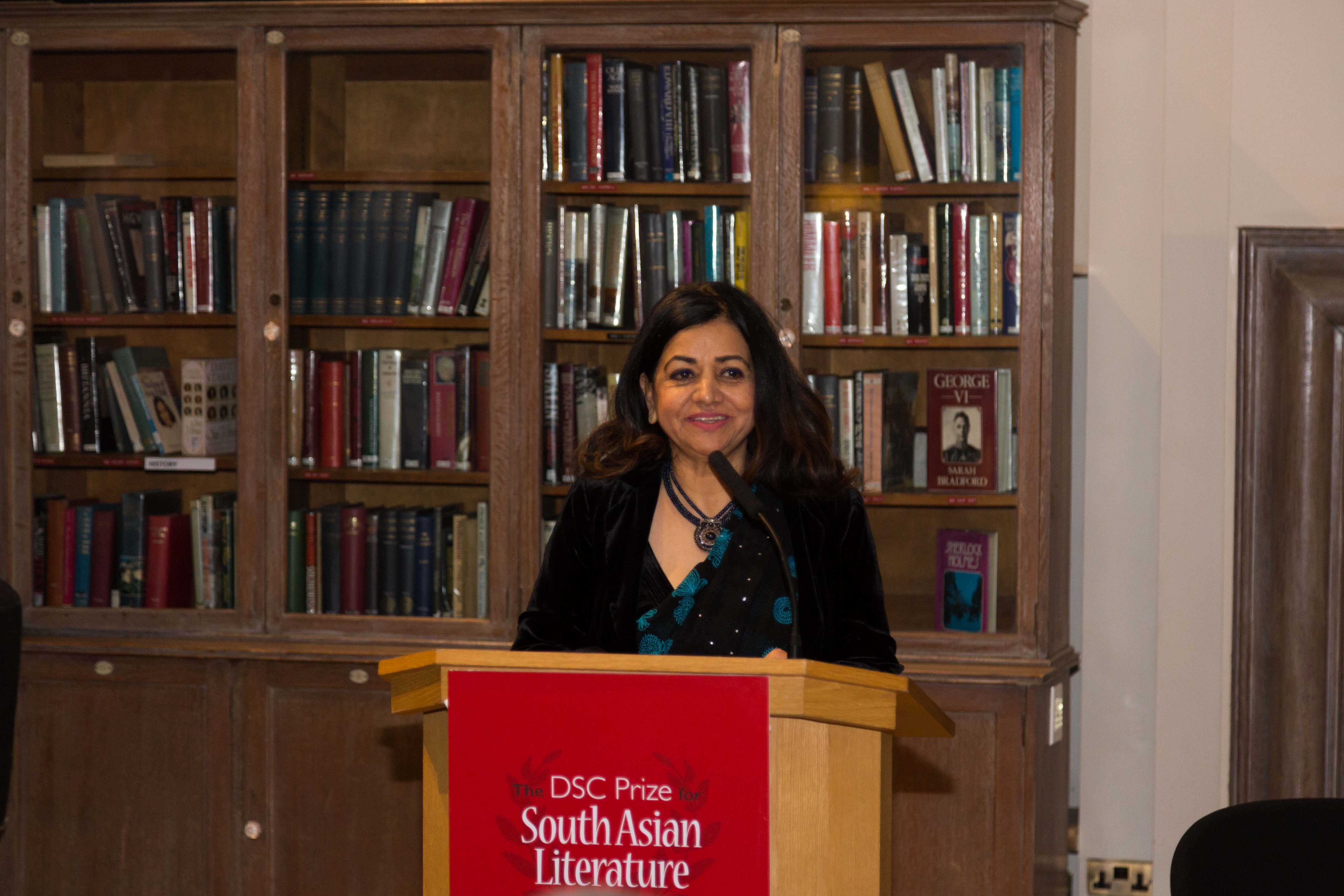
    The much-anticipated shortlist for the DSC Prize for South Asian Literature 2018 has been unveiled at a special event, which took place at the London School of Economics & Political Science. Now in its 8th year, the DSC Prize for South Asian Literature is one of the most prestigious international literary awards specifically focused on South Asian fiction writing.

    The announcement evening also featured a special panel discussion moderated by Claire Armitstead, Associate Editor, Culture, for The Guardian on the Importance Of Literary Prizes, with Alexandra Pringle, British publisher and editor-in-chief of Bloomsbury Publishing, and Sathnam Sanghera, British writer and author.

    Administered by the South Asian Literature Prize & Events Trust, the prestigious DSC Prize for South Asian Literature has helped to raise the profile of South Asian writing around the world by rewarding authors who write on the region. Founded in 2010 by Surina Narula and Manhad Narula, the winning author is awarded a US $25,000 prize.

    This year the prize received a record 88 entries which included stunning portrayals of migration, war and the pain of displacement, poignant love stories, the exploration of new found relationships and identities, and vivification of the personal struggles, hopes and aspirations that symbolize the urgent and divisive realities of contemporary South Asian life. The shortlisted entries contending for the DSC Prize for South Asian Literature 2018 are:

    • Jayant Kaikini: No Presents Please (Translated by Tejaswini Niranjana, Harper Perennial, HarperCollins India)
    • Kamila Shamsie: Home Fire (Riverhead Books, USA and Bloomsbury, UK)
    • Manu Joseph: Miss Laila Armed And Dangerous (Fourth Estate, HarperCollins, India)
    • Mohsin Hamid: Exit West (Riverhead Books, USA and Hamish Hamilton, Penguin Random House, India)
    • Neel Mukherjee: A State Of Freedom (Chatto & Windus, Vintage, UK and Hamish Hamilton, Penguin Random House, India)
    • Sujit Saraf: Harilal & Sons (Speaking Tiger, India)

    The prize received close to a quarter of the submissions from publishers based beyond South Asia and from countries such as the UK, USA, Canada, Australia etc, highlighting the growing interest of publishers and authors across the world in South Asian writing. The shortlisted entrants reflect this global interest, including British-Pakistani author Kamila Shamsie and Indian origin author Neel Mukherjee who are both based in the UK. Pakistani origin author Mohsin Hamid is based between Pakistan, UK and the USA, whilst Sujit Saraf is based in the USA. The growing global importance of South Asia coupled with the sweeping changes that are affecting the lives of the people here has encouraged more and more diverse writers to write about this region.

     Speaking on the occasion, Jury Chair Rudrangshu Mukherjee, said, “Being the chair of the jury of the DSC Prize has been one of the most enriching experiences of my life. I say this for two reasons. One is the sheer intellectual excitement of reading, evaluating and discussing these works of fiction. The other is the interactions I had with my four colleagues on the jury. I know I learnt an enormous amount from all of them and for this I am profoundly grateful to all of them. Evaluating these books reminded me once again of the importance of reading in human lives.”

     This year’s international jury panel includes Rudrangshu Mukherjee, Jury Chair, Professor of History and the Chancellor of Ashoka University and an internationally acclaimed historian of the revolt of 1857 in India , Nandana Sen, a writer, actor and child-rights activist and author of six books, who has worked as a book editor, a poetry translator, a screenwriter, and a script doctor, Claire Armitstead, who has also been a theatre critic, arts editor and literary editor, Tissa Jayatilaka, who was the Executive Director of the United States-Sri Lanka Fulbright Commission and is the author of several publications and has translated and edited many journals, and Firdous Azim, Professor of English at BRAC University, Bangladesh, whose research has focused on women’s writings in the early twentieth century Bengal.

    Commenting on the shortlist, Surina Narula, co-founder of the DSC Prize said, “My heartfelt thanks and commendations to the jury panel for the detailed deliberations over the last few months, and coming up with such a good shortlist. The longlist announced last month was an impressive list, it must have been a challenging task for the jury to bring this down to a shortlist of 6 books. The shortlist represents the very best of South Asian fiction writing, and the depth, creativity and unique narrative of each of these novels is indeed both impressive and inspirational. My congratulations to each one of the shortlisted authors and translator and I wish them the very best for the final award ceremony”

    Following the announcement of the shortlisted entries, the jury will convene again to select the winning author, ahead of the final award ceremony to be held at the Tata Steel Kolkata Literary Meet which would take place in Kolkata, India between Jan 22 and Jan 27, 2019.

  • STERLING MEDIA’S GLOBAL CEO NATASHA MUDHAR DISCUSSES WORKPLACE DIVERSITY

    STERLING MEDIA’S GLOBAL CEO NATASHA MUDHAR DISCUSSES WORKPLACE DIVERSITY

    By Natasha Mudhar

    As a business owner myself, I hugely appreciate the importance of diversity within the workplace – this fosters motivation, which in turn encourages creativity and productivity. In addition, an equal environment makes employees feel comfortable and secure in their jobs, which will only mean positive things for the workplace. At global communications experts Sterling Media, one of the leading brand strategy and advertising agencies in London we pride ourselves in being a diverse company, with equality taking a prized place in our values.

    Be it through unconscious bias or simple scepticism, employers from all backgrounds too often find reasons not to diversify their workforce and can even be dismissive of the companies that do. As a result, we are finding today a great deal of underemployed and untapped talent who have yet to be given the opportunity to fulfil their potential. Being one of the premier brand strategy and global advertising agencies we find diversity such a key facet of Sterling Media’s DNA.

    Our approach and attitude to our work is built on open-mindedness, and our best successes have been achieved when we call upon the diversity of thought within our own workplace. This is often something which is overlooked by many sectors, as diversity quotas often focus on outward physical differences, rather than the variety of cultural and skill-based experiences that a diverse team can provide a business. A truly diverse workforce goes even further than that, and an open-minded approach means being willing to pull upon people of all levels of ability. At Sterling Media, we’ve built a global communications environment that utilises the strengths of all our employees, regardless of any personal challenges they may have.

    Diversity has no limitations – it encompasses a range of elements, be it gender, race, ethnicity or age. A diverse environment enriches an organisation by enabling for an interaction of ideas. This is especially relevant for an international global communications business and advertising agency like ours, which engages with a global audience. We operate with an international team from countries including Switzerland, Netherlands, India, Jamaica, Italy and not to mention the UK. That’s our secret to brand strategy success.

    Miss Natasha Mudhar, Global CEO, Sterling Media, the global business and communications consultancy, bringing brands, individuals and companies closer to their purpose.

  • UFO MOVIEZ STEPS UP TO SUPPORT THE CINEMA MEDIUM  AND “FEED OUR FUTURE”, A NEW GLOBAL CINEMA ADVERTISING CAMPAIGN FOR  THE UNITED NATIONS WORLD FOOD PROGRAMME (WFP)

    UFO MOVIEZ STEPS UP TO SUPPORT THE CINEMA MEDIUM AND “FEED OUR FUTURE”, A NEW GLOBAL CINEMA ADVERTISING CAMPAIGN FOR THE UNITED NATIONS WORLD FOOD PROGRAMME (WFP)

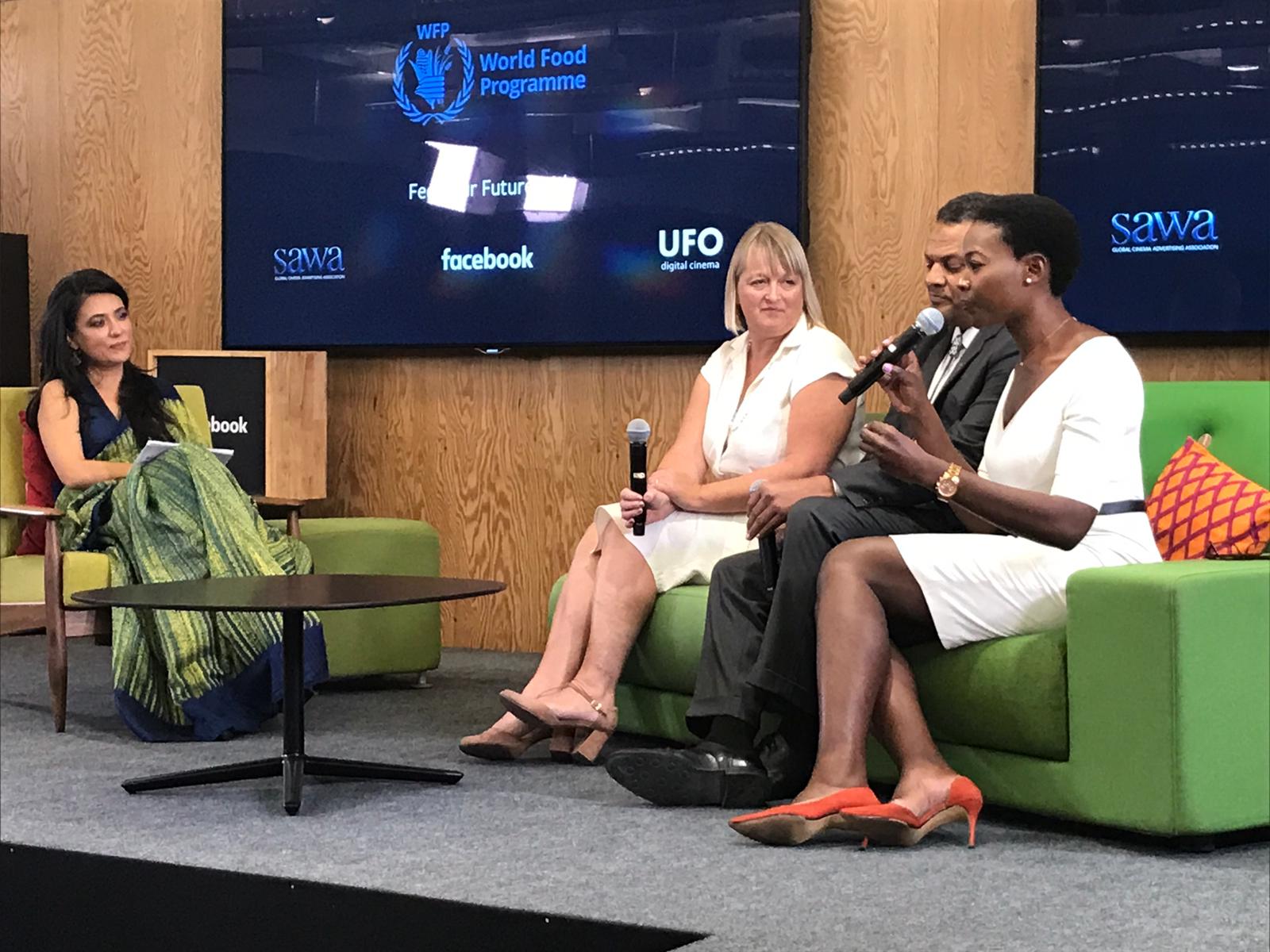
    UFO Moviez today announced its support for “Feed Our Future,” a powerful new advertising campaign aimed at getting global cinema audiences to tackle global hunger by supporting the United Nations World Food Programme (WFP), the world’s leading humanitarian organization fighting hunger worldwide. With the support of Facebook, “Feed Our Future” was launched via a Facebook Live from Facebook’s Mumbai office, and was hosted by renowned television personality Mini Mathur and featured: critically acclaimed filmmaker R Balki, the Founder of Feeding India Ankit Kawatra, celebrity chef and award-winning author Vicky Ratnani, Mr. Siddharth Bhardwaj, Chief Marketing Officer & National Sales Head, UFO Moviez and megastars Sonam Kapoor, Sonakshi Sinha, and UN Environment Goodwill Ambassador Dia Mirza.

    “This is the first time in India that a campaign of this magnitude has run towards a global cause,” said Sanjay Gaikwad, Managing Director of India’s largest digital cinema network UFO Moviez. “We’re happy to address the issue of global hunger in India with the World Food Programme. Cinema is the most impactful medium to deliver such a message to the audience in a highly captive environment. To add to this, UFO Moviez is the largest in-cinema advertising network and will run the emotionally stirring 60sec ad film across its screens for eight weeks.”

    The 60-second cinema advertisement was conceived by advertising legend Sir John Hegarty and The Garage Soho. It was directed by acclaimed film director Lynne Ramsay and produced by award-winning production company Somesuch & Co. SAWA, the Global Cinema Advertising Association, in association with WFP, will air “Feed Our Future” on cinema screens in more than 30 countries with a call to action to download WFP’s mobile-app, ShareTheMeal.

    The advertisement shows a bustling news conference with journalists vying to interview the recipient of a breakthrough medical research award. But the journalists learn that there was ultimately no medical breakthrough – the chilling conclusion reveals that Miriam Adeke, the young woman in question, had in fact died of hunger when she was only eight years old.

    “The creative challenge here is to find a way of engaging the audience without resorting to endless images of starving children. Creating empathy by reminding the viewer that when a child dies, we all lose,” said Sir John Hegarty.

    Inspired by the cinema advertisement’s message, Facebook is bringing the campaign to life through an integrated digital campaign. Borne from a “Hack for Good” at the recent Cannes Lions Festival for Creativity, the Facebook Messenger experience was created by a team of award-winning creatives from across the industry and Facebook’s Creative Shop to give viewers the opportunity to engage with the character from the advertisement and learn more about hunger. At a time when 821 million people – roughly one in nine of the global population – still go to bed on an empty stomach, this new digital integration will bring the offline online by connecting viewers with the cinema advertisement and the issue in an exciting new way.

    “Hunger is a major global issue,” said Cheryl Wannell, CEO of SAWA. “It is therefore fitting that the Cinema medium, with its global reach, should be proactive in driving awareness for the World Food Programme. Millennials who are educated, socially aware and a hard to reach demographic, make up a large part of the Cinema audience and these are the people that can and will facilitate change. Since 2015, the Cinema Medium has stepped up to support the Sustainable Development Goals and we are committed in 2018 and beyond to make the World Food Programme famous by using the power and impact of the Cinema Medium. SAWA encourages other mediums to do likewise.”

    The Facebook Messenger experience will enable viewers to engage with the ad’s main character, Miriam Adeke, to learn more about her story and the issue of hunger by searching ‘ShareTheMeal’ on Messenger.

    “Three million children die every year of hunger or malnutrition,” said Corinne Woods, Director of Communications, Marketing and Advocacy of the United Nations World Food Programme. “When partners like SAWA and their members step up, it helps us create a movement and generate support for our work to ensure that every child has the vital food and nutrition they need – not only to survive – but also to thrive.”

    Thanks to UFO Moviez’s generous support, the advertisement will air on UFO Moviez’s screens across India for the next eight weeks, and the message about aiming for a world with Zero Hunger will be heard by millions across India. For more information about the “Feed Our Future” advertisement and campaign, and to learn how to get involved in creating a world with Zero Hunger, please visit: www.wfp.org/feedourfuture.

  • DSC SOUTH ASIAN LITERATURE PRIZE

    DSC SOUTH ASIAN LITERATURE PRIZE

    16th January 2016; Sri Lanka: Anuradha Roy has been announced as the winner of the prestigious DSC Prize for South Asian Literature 2016 for her novel, Sleeping on Jupiter at the Fairway Galle Literary Festival in Sri Lanka. In a glittering ceremony, the US $50,000 DSC Prize along with a unique trophy was awarded by Hon. Ranil Wickremesinghe, Prime Minister of Democratic Socialist Republic of Sri Lanka to the winner.

    The six shortlisted authors and novels in contention for the DSC Prize this year were Akhil Sharma: Family Life (Faber & Faber, UK), Anuradha Roy: Sleeping on Jupiter (Hachette, India), K.R. Meera: Hangwoman (Translated by J Devika; Penguin, India), Mirza Waheed: The Book of Gold Leaves (Viking/Penguin India), Neel Mukherjee: The Lives of Others (Vintage/Penguin Random House, UK) and Raj Kamal Jha: She Will Build Him A City (Bloomsbury, India).

    Now in its sixth edition, the DSC Prize for South Asian Literature is an established international literary prize that awards the best work in South Asian fiction writing each year. This year the DSC Prize had received 74 entries with participation from publishers from the South Asian region as well as from countries like the UK, US, Canada, Australia and South Africa amongst others. The DSC Prize for South Asian Literature which is specifically focused on South Asian writing is unique in the sense that it is not ethnicity driven in terms of the author’s origin and is open to any author belonging to any part of the globe as long as the work is based on the South Asian region and its people. The past winners have been from various countries and their work has reflected the importance of South Asian culture and literature.

    The DSC Prize for South Asian Literature 2016 was judged by a diverse and distinguished five member jury panel comprising eminent figures drawn from the international literary fraternity who have worked in or around South Asian literature and issues. The jury panel comprised of Mark Tully, Chair of the jury panel and renowned journalist who has commentated on a wide range of issues affecting the South Asian region for over four decades; Dennis Walder, Emeritus Professor of Literature at the Open University, UK, who has authored several articles and books on 19th and 20th century literature; Karen Allman, highly respected book seller and literary coordinator based out of Seattle, USA; Neloufer de Mel, Senior Professor of English at the University of Colombo, Sri Lanka, who has written extensively on society, culture and feminism; and Syed Manzoorul Islam, celebrated Bangladeshi writer, translator, critic and academic.

    Speaking on the occasion, Mark Tully on behalf of the jury said “We had a shortlist of six outstanding books. Their excellence made our task particularly difficult. We chose Sleeping on Jupiter by Anuradha Roy because of its elegance, flair and readability. It raises many issues succinctly and with commendable economy of words. The South Asian setting is described faithfully and evocatively. Among the issues raised are the power of memory and myth, religious hypocrisy, sexuality, abuse and other forms of violence. The novel contains powerful portraits of both major and minor characters. We believe this book will be a source of inspiration to other writers.

    Congratulating the winner, Surina Narula, MBE and co-founder of the DSC Prize said “My heartfelt congratulations to Anuradha Roy for winning the DSC Prize for South Asian Literature 2016. The winning novel highlights the changing dynamics in South Asian life and culture in a unique way. It must have been a tough task for the jury members to choose from the six exceptional contenders and arriving at the eventual winner as each one of the novels represents the very best in South Asian fiction writing. Completing six successful years, the DSC Prize remains focused on recognizing and showcasing the immense talent writing about the South Asian region and bringing it to the larger global audience.”

    Hon. Ranil Wickremesinghe, Prime Minister of Democratic Socialist Republic of Sri Lanka was the Chief Guest of the event. While presenting the trophy to the winner he commented on the importance of South Asian literature and the crucial role it can play to improve the lives of the people living in this region.

    The last five winners of the DSC Prize have been Jhumpa Lahiri (The Lowland: Vintage Books/Random House, India), Cyrus Mistry (Chronicle of a Corpse Bearer: Aleph Book Company, India), Jeet Thayil (Narcopolis: Faber & Faber, London), Shehan Karunatilaka (Chinaman: Random House, India) and HM Naqvi (Home Boy: Harper Collins, India). Each of these winners has gone on to be published internationally and their work has reached a larger global audience which has been one of the central visions of the DSC Prize.

    Over the years the DSC Prize for South Asian Literature has been deeply involved in supporting the cause of South Asian literature and is committed to widen the ambit of conversation on South Asian writing by reaching out to diverse audiences through its various events and initiatives.